

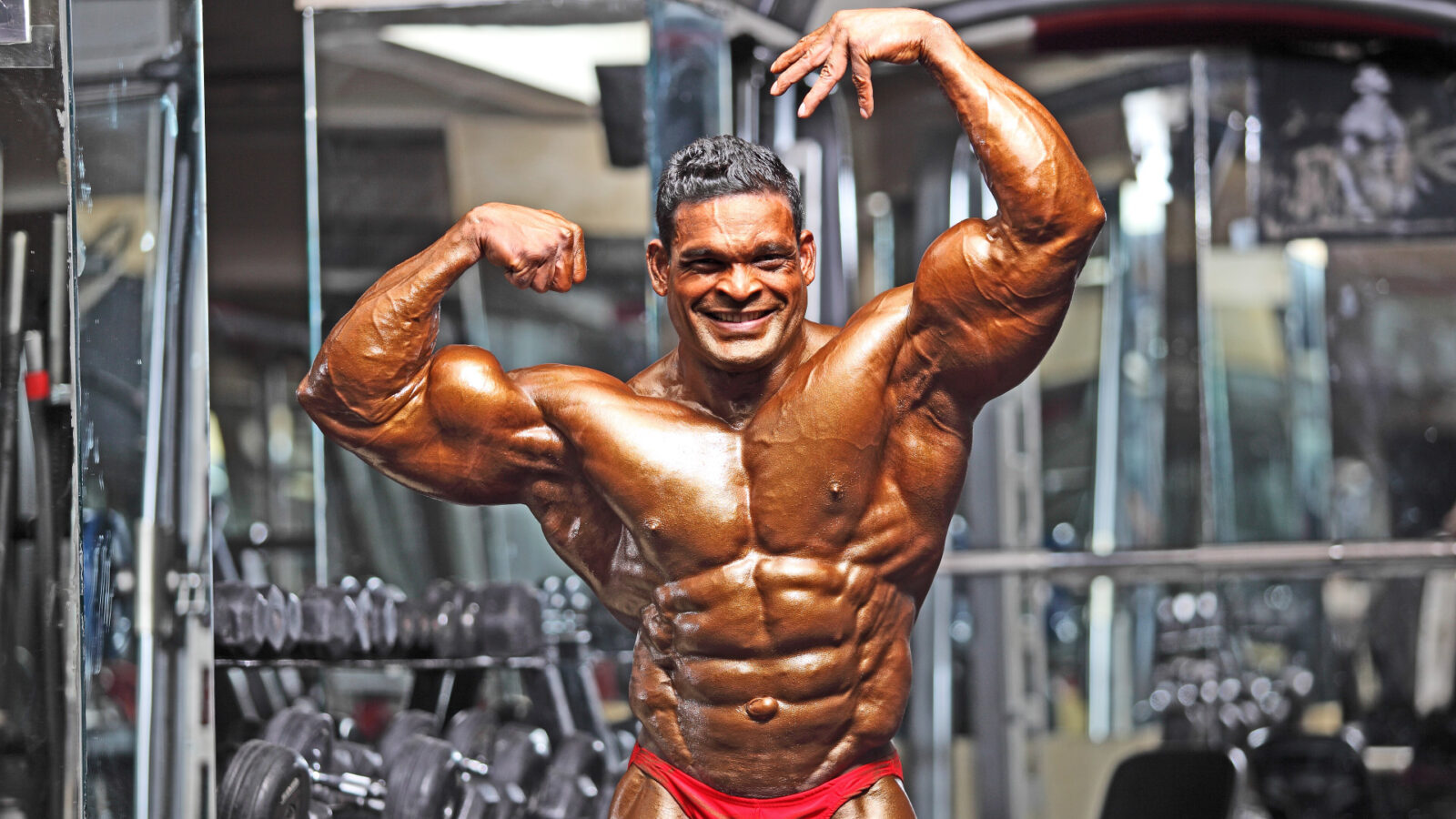
You go to the gym to improve your physical and mental health, but let’s be honest for a moment. Of course, we are simply there to get a much fitter body. We want more definition and, ultimately, just to look better. For years, I hit the gym just to train a lot, because the rest would follow automatically. At first, that seemed to work. Until I discovered that it wasn’t ‘just’ training a lot, and that there was a bit more to it than that. The result: I mainly trained my strength. I did get stronger, but the definition in my muscles lagged behind. It turned out that I was training the wrong way. I had, of course, heard of hypertrophy, but what was that again?
‘Destroying’ to rebuild
Hypertrophy. The word is borrowed from the ancient Greek language and is derived from the Greek hyper (above, too much) and trophe (nutrition, growth). According to the internet, it means an increase in the size of individual cells, causing the entire tissue or organ to become larger. But how does that actually work? Hypertrophy essentially means that you train yourself to the point of slightly damaging your muscles, that your body recovers through proper nutrition and sufficient rest, and makes itself thicker for the next time you demand this from it. So it not only repairs minor muscle tears but also makes the muscle thicker, so that it can absorb the ‘shock’ next time. As a result, the muscle grows rounder. Thicker. So basically: Training > minor muscle damage > recovery > larger muscle = hypertrophy.
For your physique, this means that your build will look fuller. Think of broader shoulders, a full chest, bigger arms, or stronger legs. It doesn’t automatically make you look ‘drier,’ but it does ensure that as your muscle mass increases and you can lower your body fat percentage, your muscles become much more visible. Even if you don’t get ‘bigger,’ hypertrophy still ensures that you achieve a more athletic and compact appearance. However, it does depend on your physique (what is your genetic makeup?), which muscle groups you train, whether you pay sufficient attention to your calories and protein (1.8 grams per kilo of body weight), how much you train, and even more importantly: how much you work on your recovery. We can therefore conclude that it involves more than just messing around with weights.
How do I achieve the right hypertrophy?
Hypertrophy is therefore not simple. It is not something you can just try for a month or so and then achieve easily. Let’s start with the fact that your muscles are given a reason to adapt every time. More weight, more reps per set, but also more sets per exercise and a shortening of the rest between sets. To achieve hypertrophy, your body demands the utmost. Train until you really can’t go on anymore. Ideally, finish while you still have 3 RIR (reps in reserve). Muscle growth at this level also requires the right nutrition. I just briefly mentioned the 1.8 grams of protein per kilo of body weight, but a little more would be better. If you are at 2 grams per kilo of body weight, that would be perfect. Also consider a calorie surplus of 250 – 500 kcal. Without the right building blocks, you are hindering your own growth.
And then there is the consistency of training. You will achieve the greatest growth in the first year of training in the right way. For the next two years, this growth will still be strong, and after that, growth will slow down. The most impressive muscle-builders train seriously for between five and ten years. But: It is good that we now know what we are training, how we are training, and what our nutrition will look like. Most muscles still grow outside the gym. Your deep sleep is the sleep phase in which we recover best and where we reach the peak of GH (growth hormone). And with short sleep, you do not achieve that. Chronic poor sleep inhibits hypertrophy. The bigger naturals of today sleep between seven and nine hours a night and ensure the right rest days per week.
The three types of hypertrophy
And then, in addition, there are three types of hypertrophy to be named.
Sarcoplasmic hypertrophy is the type of muscle growth used by many bodybuilders. It makes your muscles look bigger because the fluid inside the muscle cells increases. This makes the muscles look fuller but does not make the muscle fibers much stronger. You get this growth by doing many reps per set, resting for short times between sets, and creating a strong pump during workouts.
Myofibrillar hypertrophy occurs when your muscle fibers become stronger and denser due to an increase in myofibrils, the contractile components within your muscles. Instead of performing many repetitions per set, you focus on fewer reps with the heaviest weight possible. This approach creates small amounts of muscle damage, which your body repairs by adding extra contractile proteins like actin and myosin. As a result, you may not see rapid muscle size gains, but your strength significantly improves.
Myonuclear hypertrophy occurs within muscle fibers, which contain multiple cell nuclei known as myonuclei—think of these as control centers. When you engage in strength training, your muscles experience intense stress and minor damage. In response, your body repairs and adapts by adding additional myonuclei to the muscle fibers. These extra nuclei increase the muscle’s capacity to produce proteins, enabling the muscles to grow larger and stronger. This process not only enhances muscle size and strength but also creates muscle memory, making it easier to regain muscle growth after a period of rest or inactivity.
Supplements can help you with hypertrophy. Whey Isolate (2 g per kg body weight), 3-4 cups of coffee before training for power output, focus, and training volume, and Creatine 3-5 grams per day. 3.2 to 6.4 grams of Beta Alanine per day and HMB can help with high training stress.
So in short, the conslusion is that you just should damage these muscles (a bit), use the right supplements and take good care of yourselves.