

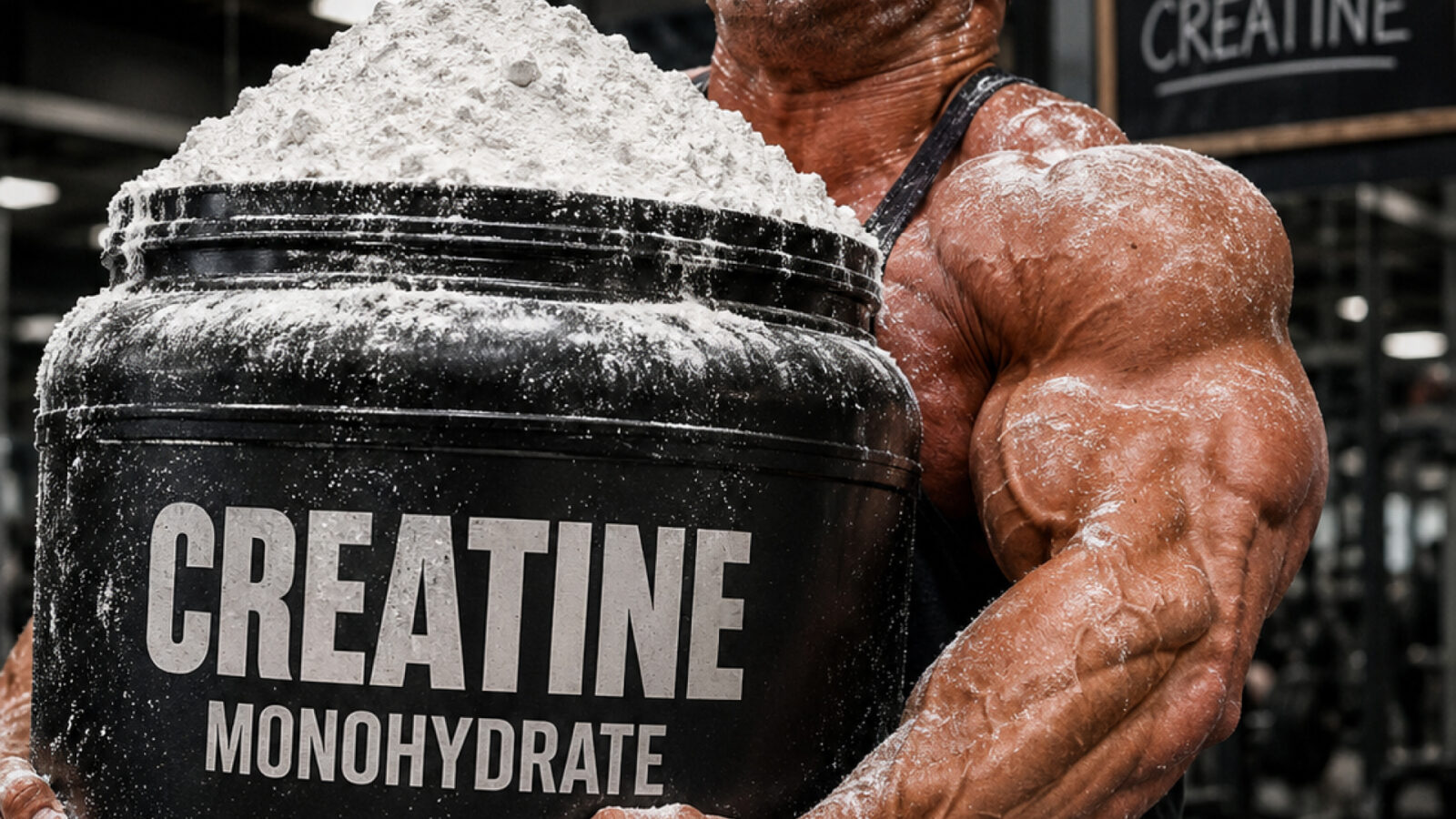
One of the most widely used supplements is Creatine. Together with (Whey) Protein and Caffeine, this forms a particularly effective stack. But what exactly is Creatine, and how does it work? In this article, we take a deep dive into the subject and its mechanism of action.
What exactly does Creatine do?
Creatine is a naturally occurring substance produced primarily in the liver and kidneys. These organs produce it from amino acids. When considering the amount, it is just slightly insufficient for muscle growth, and the recommendation is to increase the intake to an additional 5 grams per day. Foods where you can find it include red meat, such as steak, but also fish. Additionally, it is naturally available as a supplement and is one of the most studied supplements, as well as the most effective for promoting strength, performance, and muscle growth.
Creatine essentially helps your muscles release energy faster during heavy workouts, particularly short, explosive efforts such as heavy sets and high reps. As a result, you can often train just a little heavier or do more repetitions. Because you can train harder, you stimulate muscle growth. Additionally, creatine draws extra water into your muscle cells, making your muscles appear somewhat fuller. Most people even notice that they recover slightly faster between sets or workouts.
And how does it work?
Simply explained, it involves a number of substances that react with each other. During intense exertion, your muscles use an energy molecule called Adenosine triphosphate (ATP). Think of it as fuel for your cells. These molecules are produced from nutrients such as carbohydrates and fats. These molecules become depleted within seconds of strenuous performance. The creatine you ingest is stored in your muscles as phosphocreatine, and this helps your body produce ATP again at lightning speed.
This allows you to do just that extra rep in your set, gives you just a little more strength than you normally have, and you recover just a little faster between sets, allowing you to build more muscle mass and strength over time. That extra bit per day accumulates over weeks and months, meaning the effect can be lightning fast. Within one to three weeks, it helps you generate more strength, develop a faster feeling of fullness in your muscles because Creatine draws water into your muscle cells, and helps you gain one to three kilos of body weight.
Is Creatine an Anabolic?
The question is sometimes asked, quite wrongly, to what extent Creatine resembles an anabolic steroid. And in itself, it is not a strange thought, because they cause your body to react differently. They are both used to improve athletic performance, but biologically they work differently in every aspect. Creatine is a substance naturally occurring in the body, but has no hormonal effect. Creatine is not a testosterone-boosting agent, does not suppress your natural hormone production, and, compared to anabolic steroids, has no typical anabolic side effects.
It is perhaps the most thoroughly researched sports supplement available, and is generally considered safe for normal use. Unlike the body’s naturally occurring substance creatine, Testosterone and other anabolic steroids are synthetic variants of male sex hormones. People sometimes compare them because Creatine also stimulates muscle growth, creates a fuller look, and is wildly popular among bodybuilders. In reality, Creatine is closer to regular protein powders and substances such as Caffeine.
#Creatine #Supplements #Bodybuilding #Fitness #MuscleGrowth