

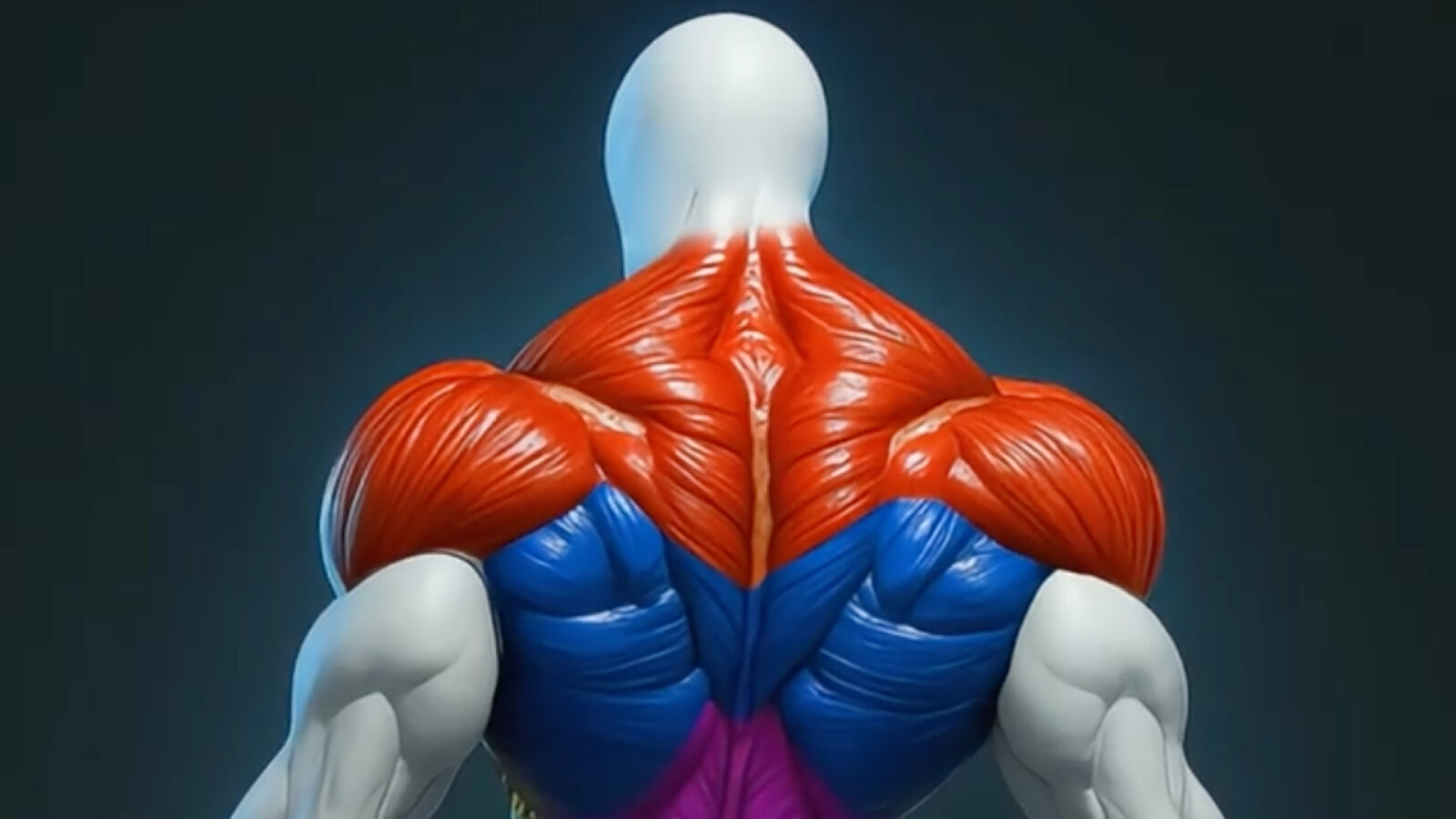
Nice, all those exercises for bigger biceps and triceps, and of course a full chest is an impressive sight in a tight shirt, but if you don’t do anything about your shoulders, it’s a bit ‘so-so’. Don’t get me wrong, you always have to train everything in proportion, but your shoulders really make the difference. The shoulders make you wider. That’s why I’m dedicating this piece to the ideal exercises, which will give you shoulders that will make you look like the strongest oak in the forest.
The anatomy of the shoulder
The shoulders play a crucial role in physique, determining your V-taper and overall posture, and although the length of your collarbones determines your width, the width can be manipulated quite well by training your shoulders properly. Shoulders (your deltoids) consist of three parts: The Anterior, or your front shoulder head: This allows you to raise your arm forward, the Lateral, your middle shoulder head, which ensures the bulging of your shoulders on the side, which therefore makes you wider and the Posterior, which is essential for your posture, and which gives depth to the back.
You need to train the Anterior the least, because you already train it in many other exercises. For example, consider bench presses or pushups. This allows you to focus on the Lateral and Posterior, because these will help you bulge your shoulders, causing your shoulders to pop right out of your shirt. Train your shoulders twice a week for optimal muscle growth; 12 to 20 sets per week is normal, and rest an average of one and a half minutes between sets, but aim for an ultimate ‘burn’ with each set. Your shoulders will show you pretty quickly why you’re training them, and it will definitely be worth it.
The ultimate training to fully train your shoulders
- Overhead Press, 4 sets of 8-10 reps. This is an exercise where you push a weight straight above your head from shoulder height until your arms are fully extended. It is one of the best compound exercises for developing upper body strength. This is easy to do with dumbbells or a barbell.
- Dumbbell lateral raise, 4 sets of 10-15 reps. This is an isolation exercise that mainly trains the middle shoulder head (lateral deltoid muscle). In addition, the upper trapezius muscle and the rotator cuff help to stabilize the movement.
- Cable lateral raise, 3 sets of 10-15 reps. This is a shoulder exercise that mainly trains the middle shoulder head (lateral deltoid). Unlike dumbbells, the cable maintains tension throughout the movement, making the exercise very effective for muscle growth.
- Face pull, 3 sets of 12-15 reps. This is one of the best exercises for the back of your shoulders and your upper back. It helps with better posture and can help prevent shoulder complaints if you perform it correctly.
- Reverse Pec Deck, 3 sets of 12-15 reps. This is an exercise that mainly trains the back of your shoulders (the rear deltoids). Your upper back muscles also participate, such as the rhomboids and the middle trapezius. It is an excellent exercise for better posture and stronger shoulders.
- Rear Delt Fly, 3 sets of 15-20 reps. is an exercise that mainly trains the rear deltoid. In addition, the muscles between your shoulder blades also participate, such as the rhomboids and the middle trapezius. It is an excellent exercise for stronger shoulders and better posture. Finish with a perfect burn!
Rest and recovery
After a session like this, you should rest for at least 48 hours, but preferably 72 hours. This means that if you trained your shoulders on Monday, it is wise not to train them again until Thursday. Please keep in mind that your shoulders are also stressed during other workouts, such as bench pressing or dumbbell press during your chest exercises, but also exercises such as rows and pullups when training your back. As a result, you will already notice that your shoulders get less rest than you might think.
Work with controlled repetitions and train close to muscle failure (about 0–2 repetitions in reserve on the last set). A golden rule when it comes to the recovery of your shoulders is to train your shoulders again only when the muscle soreness has largely disappeared, you have regained your normal strength and when you no longer have pain in your shoulder joint.