

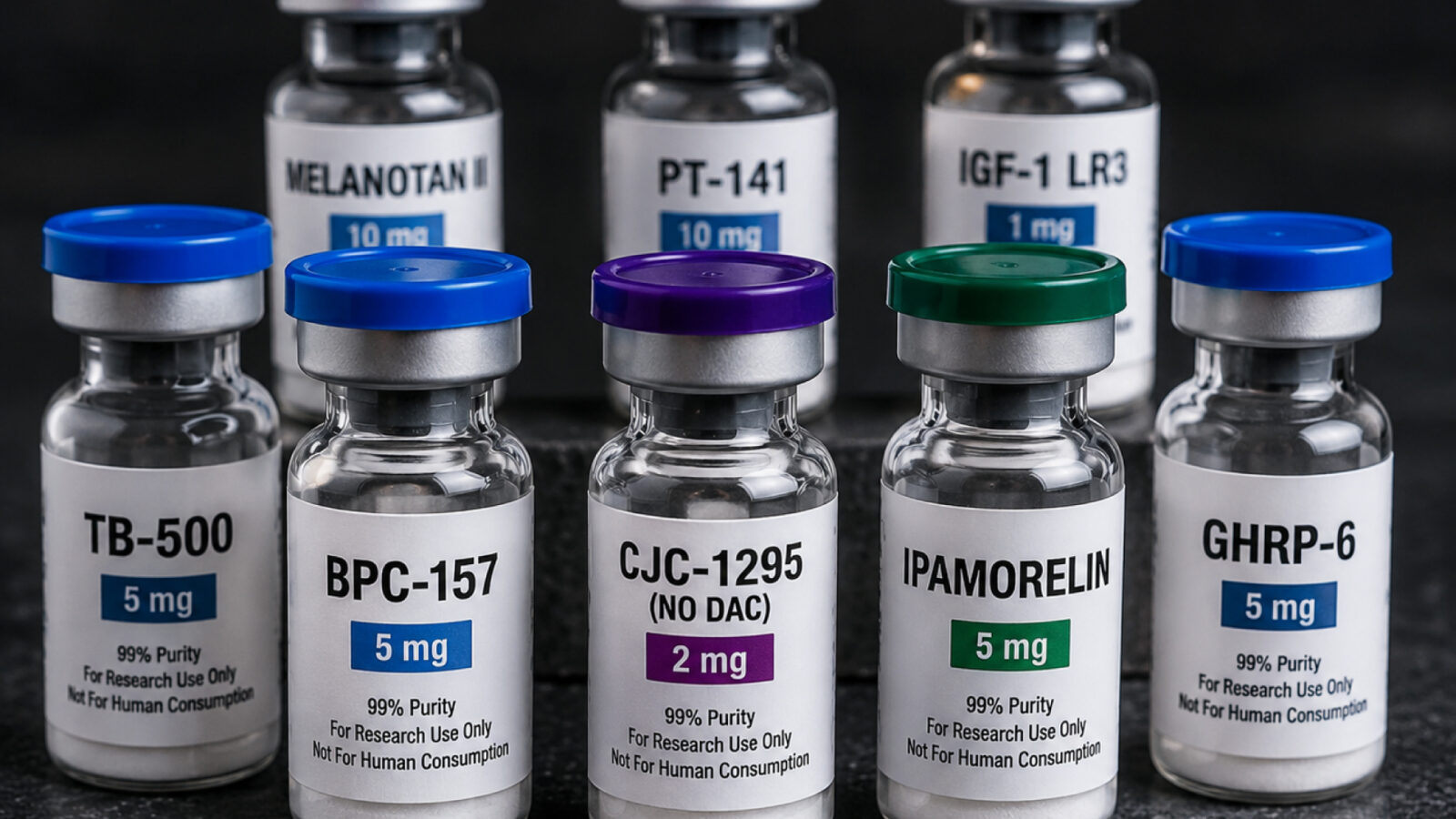
Peptides are short chains of amino acids, the building blocks of proteins. In the body, they act as powerful signaling molecules. They organize functions such as cell repair, muscle growth, and hormone regulation. You can essentially view them as small messengers that tell cells what to do.
Natural Peptides
Your body naturally produces hundreds of different peptides, of which insulin is the most well-known. But it is certainly not the only one. Important examples include Glucagon, which is actually the counterpart to insulin; this peptide raises your blood sugar precisely when it becomes too low. For bodybuilders, the peptide GH (Growth Hormone) is very important. Although it is a protein hormone (larger than a typical peptide), it stimulates the growth of muscles, bones, and other tissues. The peptide IGF-1 (Insulin-like Growth Factor 1) is also very important because it is a response to Growth Hormone and stimulates muscle growth and repair.
Similarly, your satiety depends on peptides; While Ghrelin actually gives you a feeling of hunger, GLP-1 (Glucagon-like Peptide-1) inhibits you and slows down your digestion. It also stimulates the release of insulin. Besides insulin, the peptide Endorphin is perhaps the best known; it is produced in the pituitary gland and acts as a natural painkiller, but is primarily known to most as being responsible for the feeling you experience when you have fun. The feeling of happiness you sometimes get when you have won something? That is the endorphin we mainly know!
Synthetic peptides
Synthetic peptides have also been available for quite some time. You should be particularly careful with these. Because it is not yet really known what they do to your body (in the long term). But to name a few examples: CJC-1295 (or ipamorelin) can increase the release of growth hormone (GH). As a result, this peptide could influence your muscle growth, recovery, and fat burning. GLP-1 peptides (such as semaglutide) reduce appetite and are primarily used for diabetes and obesity. BPC-157 is currently very popular and promoted online for faster tendon and muscle recovery, but there is still insufficient reliable scientific evidence that it is safe and effective in humans.
We can therefore state that peptides are important for many different things. For instance, they can influence your hormone balance, are important for stimulating muscle growth and protein synthesis, reduce your appetite, regulate your blood sugar, and influence your inflammatory responses. However, it does seem best to start using them in consultation with your doctor.
Peptides and safety
In general, a good training program, sufficient protein (approximately 1.6–2.2 g/kg body weight per day), sufficient calories, and enough sleep yield much better results than the use of peptides.
Additionally, there is too little concrete evidence that supplementing with peptides actually has the desired effect. Many positive results come from animal studies or anecdotes, and therefore not from large clinical trials. Consequently, they are not actually a guaranteed way to build more muscle mass.
The risks, on the other hand, are significant. To begin with, we do not know what injecting peptides does to your body in the long term. It has potential side effects. Such as water retention, joint pain, changes in blood sugar, or reactions at the injection site (depending on the peptide); most peptides obtained online are unreliable because they may be contaminated or incorrectly dosed; and most are on the banned list regarding elite sports.
#peptides #supplements #influencers #fitness #bodybuilding